Namibia is undergoing a fundamental transformation in how it processes and markets its mineral wealth. The era of simply digging and shipping raw ore is giving way to a sophisticated strategy built on domestic beneficiation, strategic logistics, and diversified export partnerships. As 2026 progresses, the country is positioning itself not merely as a supplier of critical minerals but as an industrial gateway for southern Africa.

Domestic Processing: Building Value at Home
The cornerstone of Namibia’s new mining strategy is value addition. Deputy Minister of Mines and Energy Gaudentia Kröhne made this unequivocal at the 2026 Africa Mining Indaba: Namibia is “open for business, but not for extraction alone”. This policy shift, now embedded in the Sixth National Development Plan (NDP6), seeks to ensure that a growing portion of mineral production is processed within Namibian borders before export.
Uranium Processing: Yellowcake Production
As the world’s third-largest uranium producer, Namibia already processes its uranium into yellowcake (U₃O₈) at mine-site facilities. Three operational mines—Rössing, Husab, and Langer Heinrich—produce this semi-processed form for export. The resurgent Langer Heinrich Mine is on track to reach maximum output by July 2026, while Bannerman Energy’s advanced Etango Project has secured a strategic partnership with China National Nuclear Corporation (CNNC), which will invest up to N$5 billion to fund construction.
Copper Processing: A Dual-Stream Model
The Haib Copper Project in southern Namibia exemplifies the future of domestic mineral processing. A Preliminary Economic Assessment (PEA) filed in October 2025 outlines a dual-stream processing model combining a conventional concentrator for higher-grade sulphide ore with a heap-leach hydrometallurgical plant for lower-grade material.
Together, these circuits will process approximately 25 million tonnes of ore annually, producing between 35,000 and 40,000 tonnes of copper per year in combined concentrate and cathode form. The project’s operating costs are forecast at US$1.28 per pound of copper, placing Haib within the lower half of the global cost curve. Metallurgical testwork has confirmed recoveries of up to 89% from flotation, validating the project’s flowsheet design.
Graphite: Supplying European Battery Chains
Namibia’s graphite resources are gaining strategic importance as Europe seeks to reduce its near-total dependence on Chinese graphite processing. Northern Graphite’s Okanjande mine has joined the USE-G project, a German-led initiative developing battery-grade graphite processing technologies. The company will supply Namibian graphite for processing into next-generation battery materials in Europe.
This positions Namibia as a key supplier in the electric vehicle battery supply chain, with European partners valuing the country’s stable investment climate and existing mine infrastructure.
Export Markets: Diversified and Growing
Namibia’s export performance in early 2026 demonstrates the sector’s strength and diversification. In January 2026 alone, the mining and quarrying sector generated N$5.7 billion in export revenue, accounting for 50% of the country’s total exports.
Uranium: The Leading Export
Uranium was Namibia’s largest exported commodity in January 2026, accounting for 26.3% of total exports and generating N$3 billion in foreign earnings. The primary destinations were China and France. This dual-market strategy—serving both Asian and European nuclear programs—provides pricing flexibility and demand stability.
The Bannerman-CNNC agreement illustrates the depth of these relationships. Under the terms, CNOL (a CNNC subsidiary) is entitled to purchase 60% of Etango’s production, with the remaining 40% marketed by Bannerman. This model combines guaranteed offtake with commercial flexibility.
Gold: Strong Regional Demand
Non-monetary gold emerged as Namibia’s second most exported commodity in January 2026, accounting for 15.8% of total exports, destined solely to South Africa for refining. This reflects the integrated nature of southern Africa’s gold value chain.
Diversifying Commodity Flows
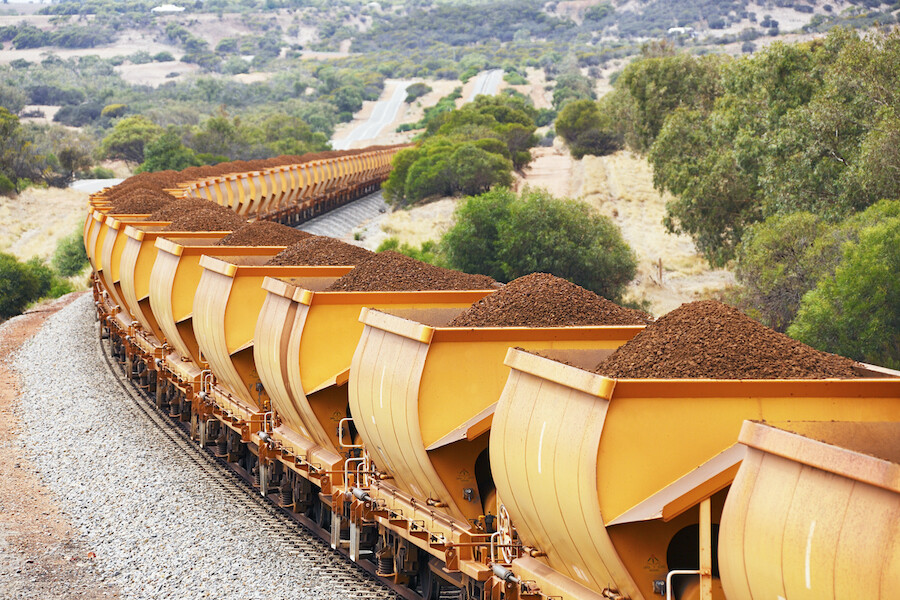
Beyond uranium and gold, Namibia is handling growing export volumes of copper, zinc, nickel, cobalt, manganese, and iron ore. The Walvis Bay Corridor Group (WBCG) reported a key milestone: the introduction of zinc exports from the Democratic Republic of Congo via the Walvis Bay–Ndola–Lubumbashi Development Corridor. This positions Namibia as a regional logistics hub, not merely a domestic producer.
The Logistics Advantage: Ports and Corridors
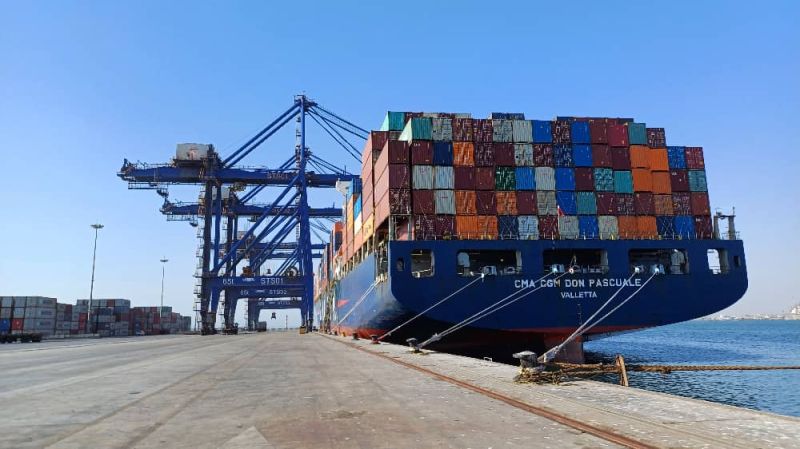
Namibia’s export strategy is enabled by world-class logistics infrastructure. The Port of Walvis Bay and the Port of Lüderitz serve as Atlantic gateways for landlocked SADC countries including Botswana, Zambia, and the DRC, offering shorter transit times than South African ports.
Corridor Developments
Several corridors are driving export growth:
| Corridor | Key Features | Commodities Handled |
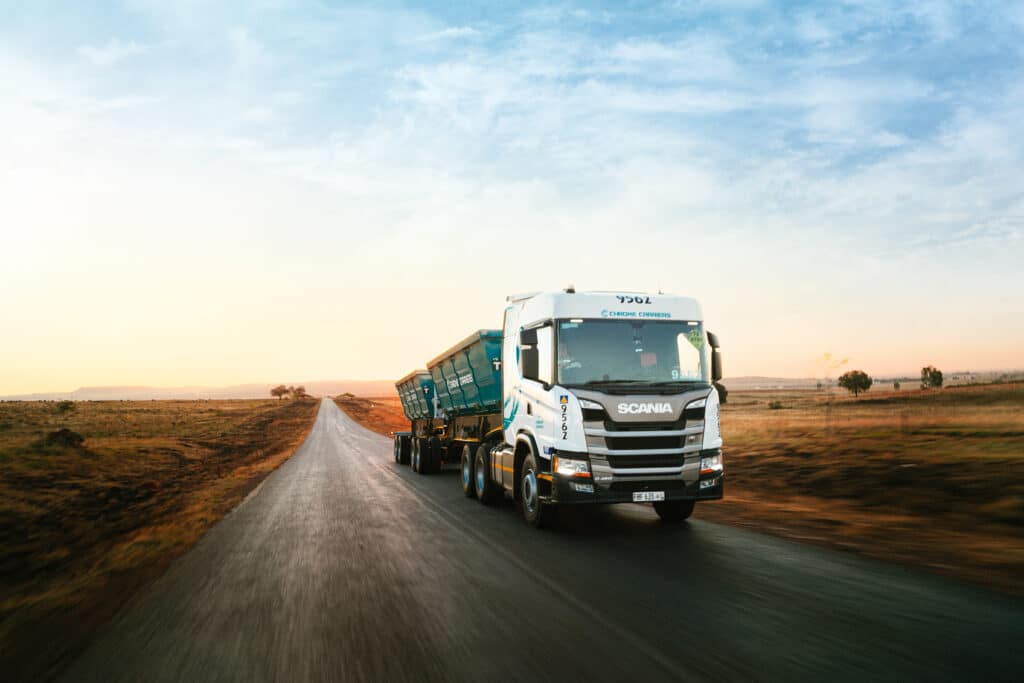
| Trans-Kalahari Corridor (TKC) | Links Botswana’s copper mines to Walvis Bay; One-Stop Border Post operational | Copper, bulk cargo |
| Walvis Bay–Ndola–Lubumbashi (WBNLDC) | Connects DRC and Zambia to Atlantic; new zinc export route established | Zinc, copper, cobalt |
| Trans-Cunene Corridor | 24-hour operation at Oshikango-Santa Clara border post | Angola trade, general cargo |
Port Infrastructure Investments
The Port of Walvis Bay has invested in modernized handling equipment, including shore cranes paired with a patented closed skip system, enabling faster loading, zero spillage, and quicker vessel turnaround times for bulk copper exports. Meanwhile, the development of the Angra Point Deepwater Port at Lüderitz is set to unlock additional manganese exports.
Market Confidence
At the 2026 Mining Indaba, the WBCG and Namport reported strong investor confidence, with several global firms indicating interest in establishing operational bases, warehousing facilities, and value-adding processing operations in Walvis Bay and Lüderitz. Acting WBCG CEO Edward Shivute emphasized that corridor competitiveness will increasingly be driven by efficiency upgrades, digitalization, and harmonized border procedures.
Strategic Partnerships: China, Europe, and Beyond
Deepening China Ties
Namibia’s most significant processing and export partnership is with China. During a high-level visit to Beijing in April 2026, International Relations Minister Selma Ashipala-Musavyi articulated a clear vision: “We want to add value to our mineral resources rather than just exporting raw materials”.
China has responded positively, expressing support for Namibia’s industrialization goals under NDP6. The relationship is mutually reinforcing: China gains supply security for critical minerals, while Namibia gains investment in processing capacity. The joint statement following the talks emphasized cooperation in “processing, conversion and related downstream cooperation”.
Chinese investment in Namibia’s uranium sector has reached nearly N$50 billion across three operating mines and one advanced development project—the Etango mine.
Europe’s Strategic Interest
Europe is turning to Namibia for graphite to reduce dependence on China in battery supply chains. The USE-G project, led by Germany’s Friedrich Schiller University of Jena and backed by the German Federal Ministry for Economic Affairs, aims to develop a fully European graphite processing route using Namibian feed material.
This partnership demonstrates that Namibia’s export markets are diversifying beyond traditional buyers, with European industrial policy increasingly targeting African sources of critical minerals.
African Continental Free Trade Area (AfCFTA)
Namibia’s participation in the AfCFTA offers preferential access to a continental market of more than 1.4 billion people. This framework supports the government’s ambition to export finished goods, not just raw materials, across Africa.
Value Addition in Action: Policy to Practice
The government’s beneficiation push is translating into tangible outcomes:
- Local Ownership Mandate: The new Minerals Bill proposes a 5% local ownership mandate and requires that a portion of mineral production remain in-country for value-added processing.
- Industrial Hub Vision: Uranium, alongside offshore oil and gas discoveries and the green hydrogen programme, forms part of a broader plan to transform Namibia into an integrated energy and industrial hub—powering domestic mineral beneficiation and manufacturing.
- Small-Scale Mining Formalization: The government is strengthening artisanal and small-scale mining (ASM) as a vehicle for poverty reduction and local economic participation, including access to finance, skills development, and market access.
Outlook: From Extractor to Industrial Partner
As 2026 progresses, Namibia’s processing and export markets are at an inflection point. The country has already achieved record uranium exports, diversified its commodity portfolio, and secured strategic partnerships with both Chinese and European buyers.
The trajectory is clear: Namibia is no longer content to be a supplier of raw commodities. The government’s message to global investors is unequivocal—partner with Namibia to process minerals locally, build industries at home, and export finished goods to regional and global markets.
For mining companies and logistics providers, this represents both a challenge and an opportunity. Those willing to invest in domestic processing capacity, respect local content requirements, and utilize Namibia’s world-class logistics corridors will find a stable, strategic, and increasingly indispensable partner in Africa’s mineral future.