Namibia’s mining sector enters the second quarter of 2026 at a fascinating inflection point. The country boasts world-class geology, political stability, and a clear industrialisation agenda—yet faces persistent structural challenges, policy uncertainties, and the ever-present gap between ambition and execution. Below, we synthesise expert commentary from government leaders, industry analysts, economists, and financial institutions on the key debates shaping Namibia’s mining future.

The Great Beneficiation Debate: From Pits to Processing Plants
Perhaps the most significant shift in Namibia’s mining narrative is the government’s unambiguous declaration that the era of exporting raw materials with minimal domestic value addition must end. At the 2026 Africa Mining Indaba in Cape Town, Deputy Minister of Industries, Mines and Energy Gaudentia Kröhne delivered what Edgar Brandt of New Era described as “one of the most assertive investment pitches in years” .
“Namibia is open for business, but not for extraction alone,” Kröhne told global investors, framing the country’s mineral wealth not as a geological accident but as a “strategic lever for industrialisation” . The message, echoed by High Commissioner Nangula Frieda Ithete, positioned Namibia as a “beacon of political stability, sound governance, and policy predictability”—credentials that matter enormously in a continent where regulatory uncertainty often spooks capital .
Yet Brandt’s editorial analysis strikes a cautionary note. “Policy stability alone will not deliver industrial transformation,” he writes. “Beneficiation requires capital, technology, skills and scale. It demands competitive electricity prices, efficient logistics and regulatory agility” . The challenge, he argues, lies in disciplined execution: “turning pits into processing plants, exports into industries, and resources into sustained prosperity.”
This tension between aspiration and reality runs through much of the current expert commentary. The government’s strategic plan under the Sixth National Development Plan (NDP6) emphasises “growth at home, value at home, and opportunity for Namibians”—but translating that vision into bankable projects requires overcoming significant infrastructure and skills gaps .
Structural Vulnerabilities: Growth Without Jobs
The Economic Association of Namibia (EAN) has offered a sobering counterpoint to the Indaba optimism. While oil, gas and mining are expected to anchor economic growth in 2026—with GDP projections around 3.8%—the EAN warns that “mining-led growth is largely capital-intensive, allowing output to rise without a corresponding increase in employment” .
“Growth of around 3% is stabilising, but not transformative,” the association states. “It helps keep the economy moving forward, but it is not sufficient on its own to significantly reduce unemployment or poverty” . This structural critique is echoed by economist Josef Kefas Sheehama, who argues in The Namibian Economist that “high unemployment, persistent income inequality, and overdependence on mining continue to constrain the economy” .
Sheehama’s prescription is strategic diversification. “Transitioning away from mining dependence to a broader, resilient economic base can generate sustainable growth,” he writes, pointing to agriculture, agro-processing, manufacturing, and the digital economy as promising avenues. Crucially, he argues that diversification requires “investments in education, skills development, and infrastructure”—long-term commitments that no single mining boom can deliver .
The EAN puts it even more starkly: “The challenge for 2026 is therefore not only about growing the economy, but about changing the kind of growth Namibia achieves” .
The 51% Ownership Firestorm: Policy Wobbles and Clarifications
No issue has dominated Namibia’s investment climate in recent months as intensely as the debate over local ownership requirements. The controversy traces back to statements by former Deputy Prime Minister and Minister of Mines Natangwe Ithete, who proposed a policy of 51% local ownership in all new mining ventures—a proposal that sent shockwaves through the international investment community .
The fallout was immediate and measurable. The Fraser Institute’s Annual Survey of Mining Companies 2025 recorded a dramatic decline in Namibia’s Investment Attractiveness Index, falling from 66 to 56 and dropping the country’s global ranking from 30th to 51st out of 68 jurisdictions . Regionally, Namibia slipped from 4th to 7th in Africa.
Chamber of Mines president George Botshiwe did not mince words: “Namibia’s decline in the Investment Attractiveness Index signals that investor perceptions of our mining policy and regulatory environment have weakened. This is particularly concerning at a time when strong mineral commodity prices are driving significant global investment into high-risk exploration” .
The government has since moved to clarify its position. In December 2025, the National Planning Commission issued a statement confirming that “no fixed local ownership threshold has been adopted” and that the government “remains open to consultations with stakeholders to ensure a balanced, win-win outcome” . The Chamber welcomed the clarification as a “critical step in restoring confidence” .
Elvis Mboya, writing in The Namibian, argues that the episode reflects a broader challenge. “Local equity requirements need an honest review,” he writes. “Policymakers must ask what value local partners bring beyond compliance and whether rigid rules align with global investment realities” . His suggestion: special economic zones in Windhoek, Swakopmund, and Walvis Bay could offer more flexible models that balance local empowerment with investment competitiveness.
Honorary Consul General Antonio Gelonesi, quoted in Stockhead, offers a more optimistic assessment: “Namibia’s attractiveness is not purely geological—it is institutional and operational” . He notes that in the previous year’s Fraser survey, under policy settings largely still in place today, Namibia ranked behind only Morocco, Botswana and Zambia for investment attractiveness in Africa.
Uranium’s Renaissance: Powering the Energy Transition
Namibia’s uranium sector is enjoying a remarkable revival, driven by global recognition that nuclear power is essential for the energy transition. Patrick Kauta of CDH Namibia and Vivien Chaplin of CDH South Africa, writing in Mining Weekly, note that “more than 30 countries have pledged to triple nuclear capacity by 2050,” creating unprecedented demand for stable, rules-based producers like Namibia .
The sector’s resilience is exemplified by Langer Heinrich Mine, which went on care and maintenance in 2018 due to persistently low uranium prices but restarted operations in late 2024. The mine is now expected to reach full capacity by mid-2026, capitalising on strong uranium prices and increased demand from both mature and developing nuclear markets .
Kauta and Chaplin highlight a strong pipeline of projects advancing through studies and approvals, including Etango-8 (Bannerman), Tumas (Deep Yellow), Norasa (Forsys), and Elevate Uranium’s portfolio. “If even a portion of these moves into construction over the next decade, Namibia’s output and strategic relevance in the nuclear fuel supply chain could increase significantly from 2026 onwards” .
However, they caution that challenges remain: water scarcity (with ongoing drought making water management a top priority), global market volatility, and environmental and societal concerns around land use, biodiversity, and long-term health impacts .
At RMB Namibia, the financial perspective reinforces this cautious optimism. In a detailed analysis of the sector’s financing needs, RMB notes that “traditional mining finance models assumed relative homogeneity within commodity classes. Today, we are structuring facilities that account for diamond price volatility while capitalising on uranium’s multi-decade demand visibility” . The bank advocates for blended finance structures, ESG-linked facilities, and innovative partnerships between development finance institutions and commercial banks as crucial tools for the current environment.
The Investor’s Perspective: Why Namibia Still Attracts Capital
Despite the policy wobbles, international investor interest in Namibia remains robust—particularly from Australian junior miners. Stockhead reports that Australian juniors alone have deployed around A$147 million across 2024-25, making Namibia one of their primary African investment destinations .
Gerard O’Donovan, MD of soon-to-list Kaoko Metals, captures the sentiment: “Namibia is a mature region that is favourable and friendly, I just don’t think people realise how friendly. It just doesn’t seem to carry the same political uncertainty and sovereign risk as other African nations” .
Antonio Gelonesi frames this as a convergence of factors: “Interest in Namibia is material, accelerating, and structurally underpinned, rather than cyclical. The jurisdiction benefits from regulatory clarity, established infrastructure, and a long mining history, which reduces sovereign and execution risk” .
On the geopolitical front, Gelonesi argues that “geopolitics is now a decisive accelerant,” with the global pivot toward energy security and decarbonisation elevating uranium demand and investment flows. “Supply disruptions in traditional resource regions such as parts of West Africa and Eastern Europe have increased the premium on stable, rule-of-law jurisdictions. Namibia’s positioning as a non-aligned, politically stable African democracy gives it a strategic advantage in securing Western, Asian and multinational capital” .
The Missing Middle: Infrastructure, Skills, and Execution
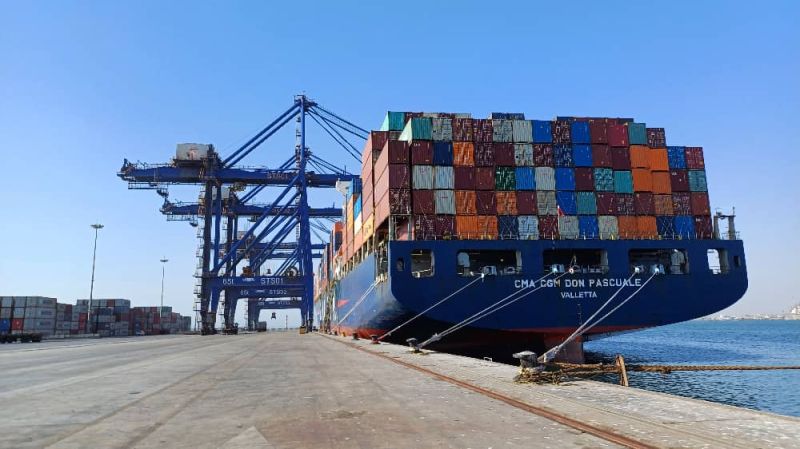
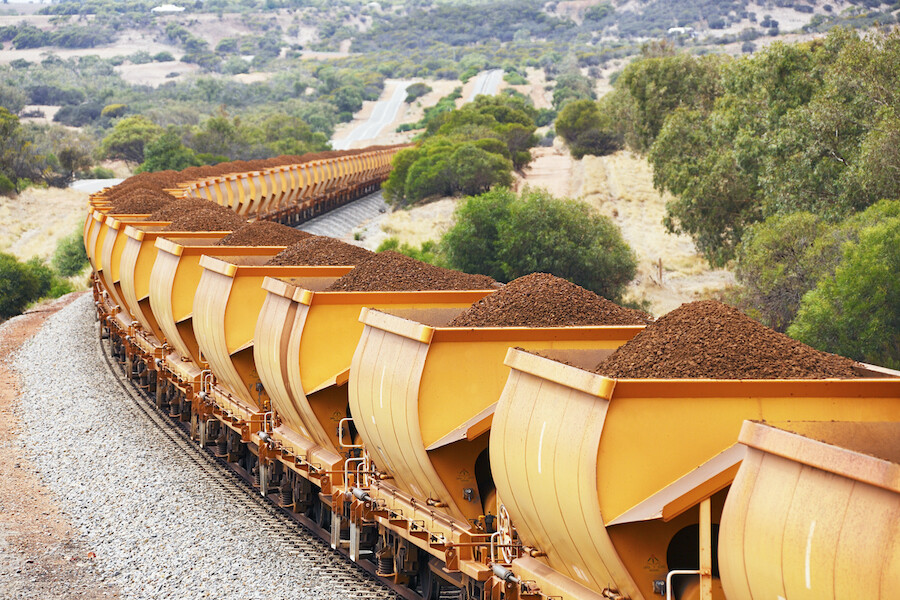
Perhaps the most consistent theme across expert commentary is the recognition that Namibia’s mineral wealth alone is insufficient. The country’s logistics advantages—the Port of Walvis Bay, the Trans-Kalahari and Trans-Caprivi Corridors—are frequently cited as world-class assets . But infrastructure gaps remain in port capacity, rail networks, water security, and energy reliability.
RMB Namibia notes that “these are not insurmountable barriers; they are opportunities for creative public-private collaboration that shares risks and rewards appropriately. Every tonne of additional port capacity or megawatt of reliable power multiplies the value of our mineral endowments” .
The skills gap is equally pressing. The EAN warns that “if Namibia wants oil and gas to contribute meaningfully to employment and development, 2026 must be used to prepare local firms to realistically participate in supply chains” . This requires developing skills pipelines aligned with actual project needs and establishing clear, workable local content frameworks.
Elvis Mboya’s 13-point agenda for Namibia’s investment future underscores the breadth of the challenge: rebuilding investor confidence, reforming Namra’s approach, streamlining visas and work permits, modernising business registration, leveraging AfCFTA opportunities, strengthening trade infrastructure, digitising government services, and ensuring genuine skills transfer from foreign investment .
“The hard question policymakers must confront is simple: If you were a foreign investor, would you choose Namibia over its neighbours? And if so, why?” Mboya writes. “Honest answers are essential if Namibia is to convert potential into measurable economic performance” .
The Verdict: Promise and Peril
As 2026 progresses, Namibia’s mining sector stands at a genuine crossroads. The geological potential is undisputed. The policy direction—toward beneficiation, local value addition, and sustainable development—is broadly supported. The logistics advantages are real.
But the gap between aspiration and execution remains wide. The Fraser Institute decline is a warning signal that cannot be ignored. The structural critique from the EAN—that mining-led growth does not automatically translate into jobs—demands a policy response that goes beyond mining policy per se. And the infrastructure and skills gaps require sustained, multi-year investment.
Edgar Brandt’s closing observation captures the moment well: “Namibia has long been a mining nation. The real question now is whether it is ready to become an industrial one” .
The answer to that question will be written not in Indaba speeches or policy documents, but in the disciplined, patient work of turning geological potential into broad-based prosperity. For now, the jury remains out—but the evidence is mounting on both sides.