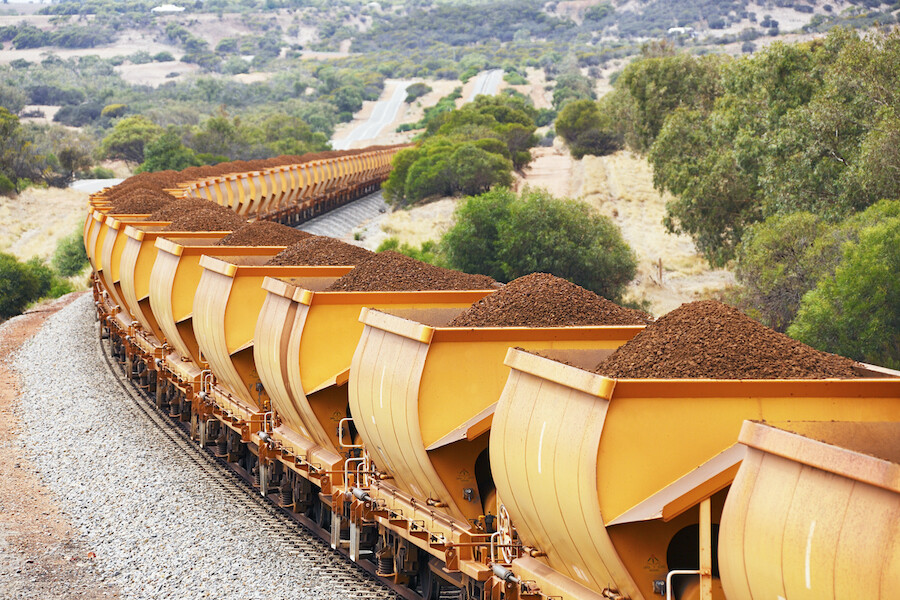
Namibia is experiencing an unprecedented wave of mining investment, driven by a powerful combination of world-class geology, political stability, strategic infrastructure development, and surging global demand for critical minerals. With 15 major projects valued at N$63.5 billion currently advancing, and total sector employment expected to reach 24,195 jobs at full capacity, the investment landscape offers diverse opportunities across uranium, gold, copper, tin, rare earths, and lithium.

The Macro Investment Case
Record Export Earnings and Sector Growth
The mining sector generated N$64.7 billion in export earnings in the 2025/26 financial year, contributing N$1.4 billion in royalties to the national treasury. Uranium and gold have overtaken diamonds as Namibia’s top export commodities, reflecting strong global demand and higher prices. The sector accounted for 14% of GDP in 2023, underscoring its central role in the national economy.
Strategic Infrastructure Enablers
A landmark N$28.5 billion partnership between the Namibian government and the African Development Bank (AfDB) is overhauling national infrastructure across two pillars: climate-resilient energy and integrated water management for mining operations, and upgrading transport and logistics corridors to transform Namibia into a southern African hub. The financing includes a US$1.5 billion lending window, complemented by US$120 million in blended finance, and US$80 million in grants for technical assistance.
Energy security is being addressed in parallel, with projects worth more than N$8 billion underway to raise national electricity generation capacity from 759 megawatts to 903 megawatts within the current financial year.
Stable, Investor-Friendly Jurisdiction
Investors consistently highlight Namibia’s mature, welcoming jurisdiction as a key advantage. Kaoko Metals CEO Gerard O’Donovan described it as carrying “less political uncertainty and sovereign risk than some other African nations”. The country offers regulatory clarity, established infrastructure, a long mining history, and a non-aligned, politically stable democratic framework.
Sector-by-Sector Investment Opportunities
Uranium: World-Class Assets and Strategic Partnerships
Namibia is the world’s third-largest uranium producer, with three operating mines—Rössing, Husab, and Langer Heinrich—located in the Erongo Region, which accounts for over 10% of global mined uranium output. The development pipeline is equally impressive.
Bannerman Energy’s Etango Project has secured a strategic financing agreement with China National Nuclear Corporation (CNNC), which will invest up to N$5 billion to fund construction in exchange for a 43% stake. Under the terms, CNOL (a CNNC subsidiary) is entitled to purchase 60% of Etango’s production, with the remaining 40% marketed by Bannerman. The two companies are targeting completion of the investment by mid-2026.
Deep Yellow’s Tumas Uranium Project is technically ready for development, hosting a total uranium resource of 118.2 million pounds of U₃O₈ and ore reserves of 79.5 million pounds. Detailed engineering is more than 65% complete, key contracts have been tendered or awarded, bulk earthworks are in progress, and a Transmission Power Supply Agreement has been executed with NamPower. At a long-term contract price of US$82.50 per pound, the project would generate a post-tax NPV of approximately US$577 million and an IRR of around 19%.
Exploration upside is significant. Skeleton Coast Uranium has closed a C$5 million (N$95 million) private placement and completed the acquisition of controlling interests in five Exclusive Prospecting Licences covering more than 610 square kilometres in the Erongo Region, positioned adjacent to or within 10-25km of existing uranium mines.
Gold: Advancing a Multi-Million Ounce District
Wia Gold’s Kokoseb Project hosts 2.93 million ounces of gold and has begun formal project financing discussions. The definitive feasibility study (DFS) remains on schedule for completion in the second half of 2026, with key technical workstreams progressing across mining, metallurgy, infrastructure and power supply. The company has submitted its Environmental and Social Impact Assessment (ESIA) to the relevant ministries, and the mining licence application is progressing through the approval process.
The Kokoseb deposit remains open at depth, with recent high-grade intercepts including 10.8 metres at 5.16 g/t gold and 20.7 metres at 5.77 g/t gold, supporting the potential for future underground mining alongside the planned open-pit operation.
Copper: Large-Scale Development and Exploration
Koryx Copper’s Haib Copper Project represents one of Namibia’s largest copper development opportunities. A Preliminary Economic Assessment outlines a dual-stream processing model combining a conventional concentrator for higher-grade sulphide ore with a heap-leach hydrometallurgical plant for lower-grade material. Together, these circuits will process approximately 25 million tonnes of ore annually, producing between 35,000 and 40,000 tonnes of copper per year.
Exploration upside is being pursued by Kaoko Metals, which plans to raise up to A$6.5 million (US$4.4 million) as part of its ASX listing to fund exploration across its Chalkos and Karibib copper assets.
Tin & Critical Minerals: Near-Term Production Growth
Andrada Mining has secured US$11 million (approximately N$206 million) through a strategic equity placement to accelerate expansion at its flagship Uis Tin Mine, one of Namibia’s largest tin operations. Funds will be used to expand crushing capacity, accelerate stripping activities, and update resource and reserve estimates.
Beyond tin, Andrada is advancing a broader portfolio through strategic partnerships. Exploration programmes at Lithium Ridge and Brandberg West are already funded through partnerships with SQM and BWCAM, allowing the company to diversify into lithium and other battery metals without additional equity pressure. CEO Anthony Viljoen stated that the funding “completes the group’s current equity funding requirements” and provides “the pathway for the Company to complete its expansion programme at Uis”.
Rare Earths: Japanese Strategic Partnership
The Lofdal Heavy Rare Earths Project represents a globally significant deposit of dysprosium and terbium—critical metals used in permanent magnets for electric vehicles and wind turbines. Namibia Critical Metals has amended its earn-in agreement with the Japan Organization for Metals and Energy Security (JOGMEC), which will increase project funding by C$3 million to support completion of a Definitive Feasibility Study targeted for Q2 2027. The amendment also provides JOGMEC the option to provide non-dilutive, risk-free pre-FID capital funding to accelerate construction.
Toyota Tsusho will join the Lofdal project as part of JOGMEC’s ownership interest, aligning Japanese industrial demand with Namibian supply. The project is fully permitted with a 25-year Mining License.
Investment by Entry Point
| Investment Type | Opportunities | Risk/Reward Profile |
| Listed Equities | Andrada Mining (LSE:ATM), Deep Yellow (ASX), Bannerman Energy (ASX), Namibia Critical Metals (TSXV:NMI), Wia Gold (ASX) | Established producers and near-production developers with market liquidity |
| Private Placements | Skeleton Coast Uranium (C$5M raise completed); exploration-stage placements | Higher risk, higher reward; early entry into discovery potential |
| Strategic Partnerships | JOGMEC at Lofdal (C$3M additional earn-in); CNNC at Etango (N$5B) | Long-term off-take and funding certainty; non-dilutive structures |
| Infrastructure & Services | Port facilities, power transmission, water supply, logistics corridors | Lower commodity price exposure; critical to sector growth |
| Exploration JVs | Kaoko Metals (ASX listing pending); exploration licences across copper, lithium, REEs | Early-stage discovery leverage |
Strategic Infrastructure and Policy Support
Infrastructure Investment
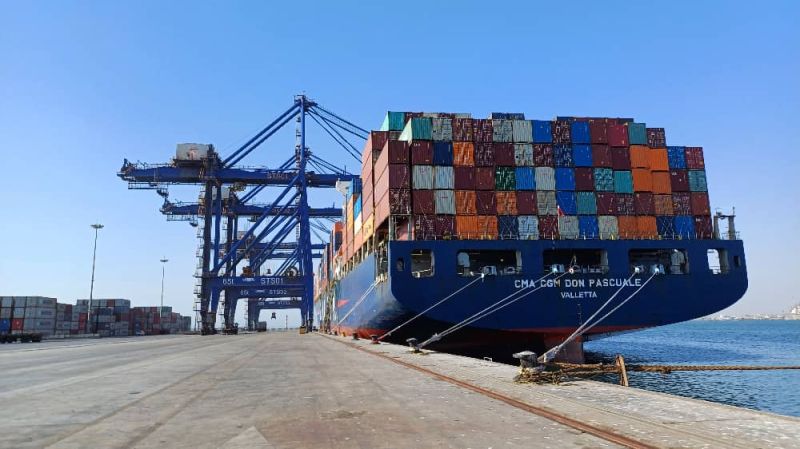
The Walvis Bay Corridor Group and Namport are actively marketing the strategic advantages of Namibia’s ports, with several global firms indicating interest in establishing operational bases, warehousing facilities, and value-adding processing operations in Walvis Bay and Lüderitz.
Policy Framework
The government is developing a Minerals Beneficiation Policy and plans to update the Minerals (Prospecting and Mining) Act of 1992 to create a more predictable and transparent operating environment. A separate study is underway to improve the use and value addition of critical minerals.
Outlook and Considerations
Positive Catalysts
- Nuclear energy revival: More than 30 countries have pledged to triple nuclear capacity by 2050
- Energy transition demand: EV and wind turbine deployment driving demand for copper, lithium, rare earths, tin
- Geopolitical premium: Western and Asian utilities seeking stable, non-aligned suppliers
- Infrastructure rollout: N$28.5 billion AfDB partnership addressing power, water, and transport constraints
Investment Considerations
- Timing discipline: Deep Yellow will only sanction Tumas when long-term uranium prices justify construction
- Policy stability: The new Minerals Bill is expected to introduce digital licensing and beneficiation requirements
- Competition: Namibia ranks 51st globally in the Fraser Institute Investment Attractiveness Index; policy clarity is improving
Summary: A Multi-Commodity Investment Destination
Namibia offers investors a rare combination of proven production, advanced development projects, and significant exploration upside across a diversified portfolio of energy transition minerals. With major strategic partnerships already in place with Japanese and Chinese state-backed entities, and a government committed to infrastructure-led industrialisation, the country is positioning itself as one of Africa’s most compelling mining investment destinations.
As President Nandi-Ndaitwah confirmed in her 2026 State of the Nation Address, the sector’s trajectory is clear: record production, strategic beneficiation, and integration into global critical minerals supply chains. For investors seeking exposure to uranium, gold, copper, tin, lithium, and rare earths, Namibia’s N$63.5 billion project pipeline offers entry points across the risk-return spectrum.