Namibia – As the country’s mining sector pivots toward uranium, gold, and critical minerals, a parallel transformation is underway in workforce development. From graduate programmes at major mines to gemstone polishing courses for artisanal miners, a multi-layered skills drive is taking shape—backed by government strategy, private investment, and union-led education initiatives.

Employment Snapshot: 20,843 Direct Mining Jobs
At the close of 2024, Namibia’s mining industry directly employed 20,843 people, according to Deputy Minister of Industries, Mines and Energy Gaudentia Krohne, speaking at the African Mining Indaba in Cape Town . The figure reflects a stable workforce against a backdrop of sectoral transformation, with uranium production resuming and diversification accelerating into rare earths, copper, and lithium.
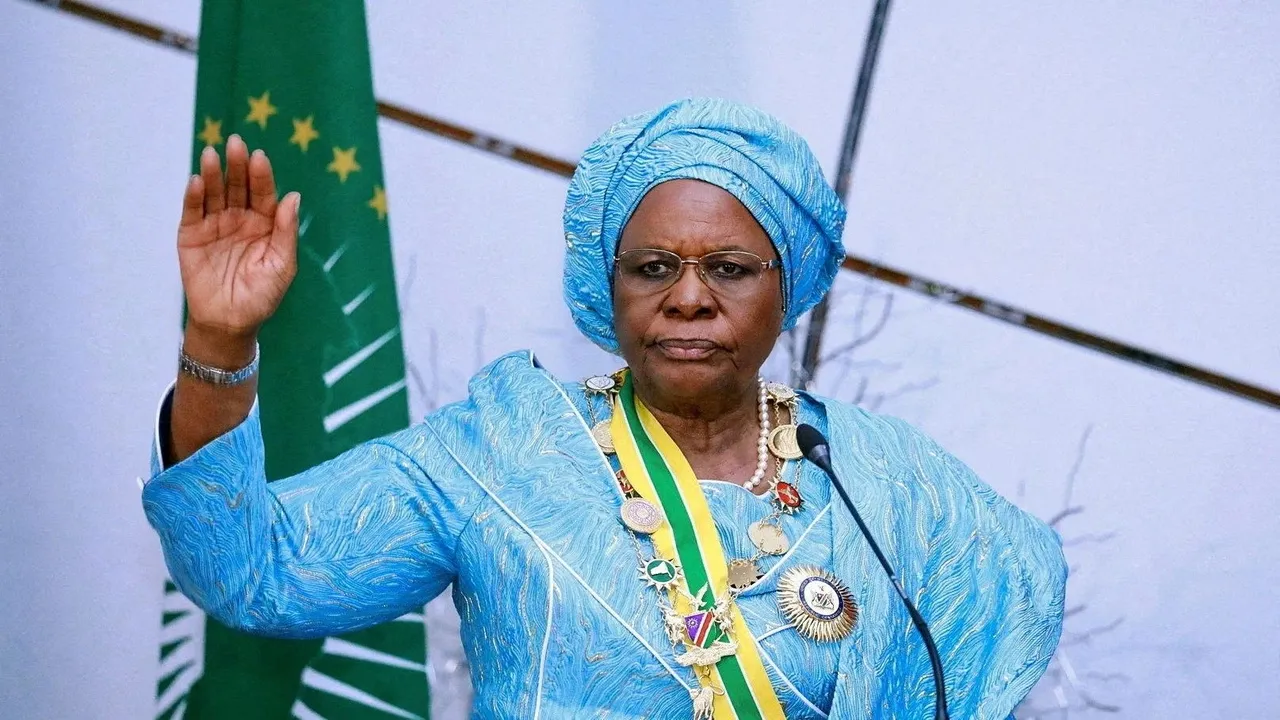
President Netumbo Nandi-Ndaitwah confirmed in her April 2026 State of the Nation Address that the mining sector created 580 new jobs during the 2025/26 financial year, alongside generating N$64.7 billion in export earnings . While modest, the net increase signals cautious optimism as the industry recalibrates from diamonds toward energy transition minerals.
Graduate Development: Langer Heinrich’s Two-Year Programme
In January 2026, Langer Heinrich Uranium (LHU) officially welcomed 11 new graduates into its structured two-year Graduate Programme . The programme is designed to bridge the gap between academic theory and practical workplace experience, equipping participants with skills across a diverse range of disciplines.
The 2026 intake spans Environment, Archaeology, Metallurgy, Geology, Electrical, Mining, Procurement, Occupational Health & Hygiene, and Radiation Safety . This multidisciplinary approach reflects LHU’s commitment to building a well-rounded workforce capable of supporting the mine’s operational and sustainability objectives.
The programme aligns directly with Namibia’s National Development Plan 6 (NDP6) youth skills development targets, positioning the mine as a key feeder of trained professionals into the broader industry .
Technical Training: Navachab’s N$250,000 Equipment Donation to NIMT
In February 2026, QKR Namibia Navachab Gold Mine handed over a lathe, milling machine, and bandsaw valued at approximately N$250,000 to the Namibia Institute of Mining and Technology (NIMT) Arandis Campus .
“Sustainable mining is not only about responsibly extracting mineral resources; it is about investing in people, empowering communities, and developing the technical capacity that sustains our industry and our country,” said McLyn Kasale, Senior Public Relations and Communications Officer at Navachab .
The donated equipment—all fully functional—will be integrated into NIMT’s mechanical workshops to support students pursuing fitting and turning and related engineering disciplines. Navachab maintains a longstanding Memorandum of Understanding with NIMT that facilitates internships, apprenticeships, job attachments, and graduate development programmes .
Randy Erkana, speaking on behalf of NIMT management, noted: “Today, you are not just handing over machines. You are investing in people. You are investing in skills. You are investing in the future of Namibia’s technical workforce” .
Small-Scale Miners: Gemstone Cutting and Polishing at Karibib
In a significant boost to artisanal mining, 28 trainees—including nine from the Neu-Schwaben area—have been selected for a six-month gemstone cutting, polishing, and jewellery-making course at the Karibib Gemstone Polishing Centre . The training targets unemployed youth and women aged 18 to 35 with at least a Grade 8 qualification.
The initiative forms part of government efforts to empower communities and stimulate local enterprise development. According to the Ministry of Industries, Mines and Energy (MIME), small-scale mining “supports livelihoods for a significant number of individuals and their families, thereby playing a crucial role in poverty reduction and enhancing living standards” .
Metirapi Lucky Kapekarua, chairperson of the small-scale miners at Neu-Schwaben—where tourmaline is predominantly mined—said the training addresses a critical challenge: low returns from selling unprocessed stones. “When you sell a stone in its rough form, you get far less value. But once it is cut and polished, the same stone can fetch a much higher price,” he explained .
Trainee Martha Hangula, who has spent three years in small-scale mining, described the opportunity as life-changing. “If you do not find stones, you go hungry. I am therefore very excited about gaining skills that could improve my income, in turn an improved livelihood for my family,” she said .
Since its establishment, the Karibib Gemstone Polishing Centre has trained nearly 250 Namibians, contributing to skills development and job creation within the mining value chain. Approximately 83% of trainees from recent cohorts have secured employment, many absorbed into the diamond cutting and polishing industry .
Union-Led Education: N$748,000 in Bursaries for 147 Students
The Mineworkers Union of Namibia (MUN) has reaffirmed its commitment to education, awarding bursaries totalling N$748,181 to 147 students for the 2026 academic year . The funding is facilitated through the union’s NAMIT Education Fund and supports students at institutions including the University of Namibia, NUST, STADIO, IUM, and the Namibia Institute of Mining and Technology.
To date, the union has funded 584 students across the country, with 50 beneficiaries having graduated. Of the beneficiaries, 70% are female and 30% male .
The fund, which previously catered to all students, now primarily supports postgraduate students following the introduction of subsidised tertiary education for undergraduates. The MUN reported a 15% increase in applications compared to the 2025 academic year, reflecting growing national appetite for advanced education .
Among the beneficiaries is Martha Iikela, pursuing a PhD in Extractive Industry Oil and Gas at the University of Petroleum and Energy Studies in India. “I lost my parents at the age of seven. For many years, I struggled to make it to university. Then the MUN stepped in. I discovered that my father had been a member of the union, and through this support, my first registration was paid. I went on to complete my master’s in Oil and Gas, and this year I am proud to be registered for a PhD,” she shared .
Government Strategy: Five-Year Roadmap for Capacity Building
The Ministry of Mines and Energy’s Strategic Plan for 2025/26 to 2029/30 places workforce development at its core . Presenting the plan, Minister Modestus Amutse said the ministry seeks to “reposition itself as a dynamic driver of industrialisation,” with a central focus on nurturing local content and building domestic capacity in mining, mineral value addition, and green industries .
Five strategic pillars underpin the roadmap: infrastructure development, manufacturing and value addition, geoscience and natural resources development, energy sustainability, and good governance . Within the geoscience pillar, the plan specifically seeks to “empower Namibians to participate in the mining industry” .
This government-led push is complemented by the N$28.5 billion partnership between the government and the African Development Bank (AfDB), launched in March 2026 . The five-year Country Strategy Paper allocates substantial resources to human capital development, with a specific focus on technical and vocational education to address Namibia’s “alarmingly high” youth unemployment rate .
Finance Minister Ericah Shafudah noted that the strategy is a direct response to global shocks and commodity volatility. “We are moving toward labour-intensive engines of growth. Our focus is on diversifying the economy to ensure Namibia is no longer vulnerable to the highs and lows of a single industry,” she said .
Local Content Policy: Skills Transfer as a Condition
The government is embedding workforce development into regulatory frameworks. President Nandi-Ndaitwah confirmed that a local content policy is being developed for the oil and gas sector “to ensure Namibians benefit through jobs, skills transfer and business opportunities” . This approach is expected to extend across the mining sector as the new Minerals Bill advances.
Deputy Minister Krohne emphasised Namibia’s commitment to supporting small-scale miners through finance support schemes and training support programmes designed to equip the workforce with emerging skills in critical minerals extraction and processing .
Outlook: Building a Sustainable Talent Pipeline
As Namibia positions itself as a hub for uranium, rare earths, and oil and gas, the demand for a skilled workforce will only intensify. The current landscape—characterised by graduate programmes at major mines, technical training through NIMT, artisanal upskilling at Karibib, and union-led bursaries—represents a multi-pronged response.
The challenge ahead lies in scaling these initiatives fast enough to match the pace of project development. With major uranium mines ramping up production, copper projects advancing toward first concentrate, and oil and gas FIDs on the horizon, the competition for qualified Namibian professionals will intensify.
If the government, private sector, and unions maintain their current trajectory of collaboration, the country stands to build not just a mining industry, but a lasting legacy of technical expertise that extends far beyond the life of any single mine.